

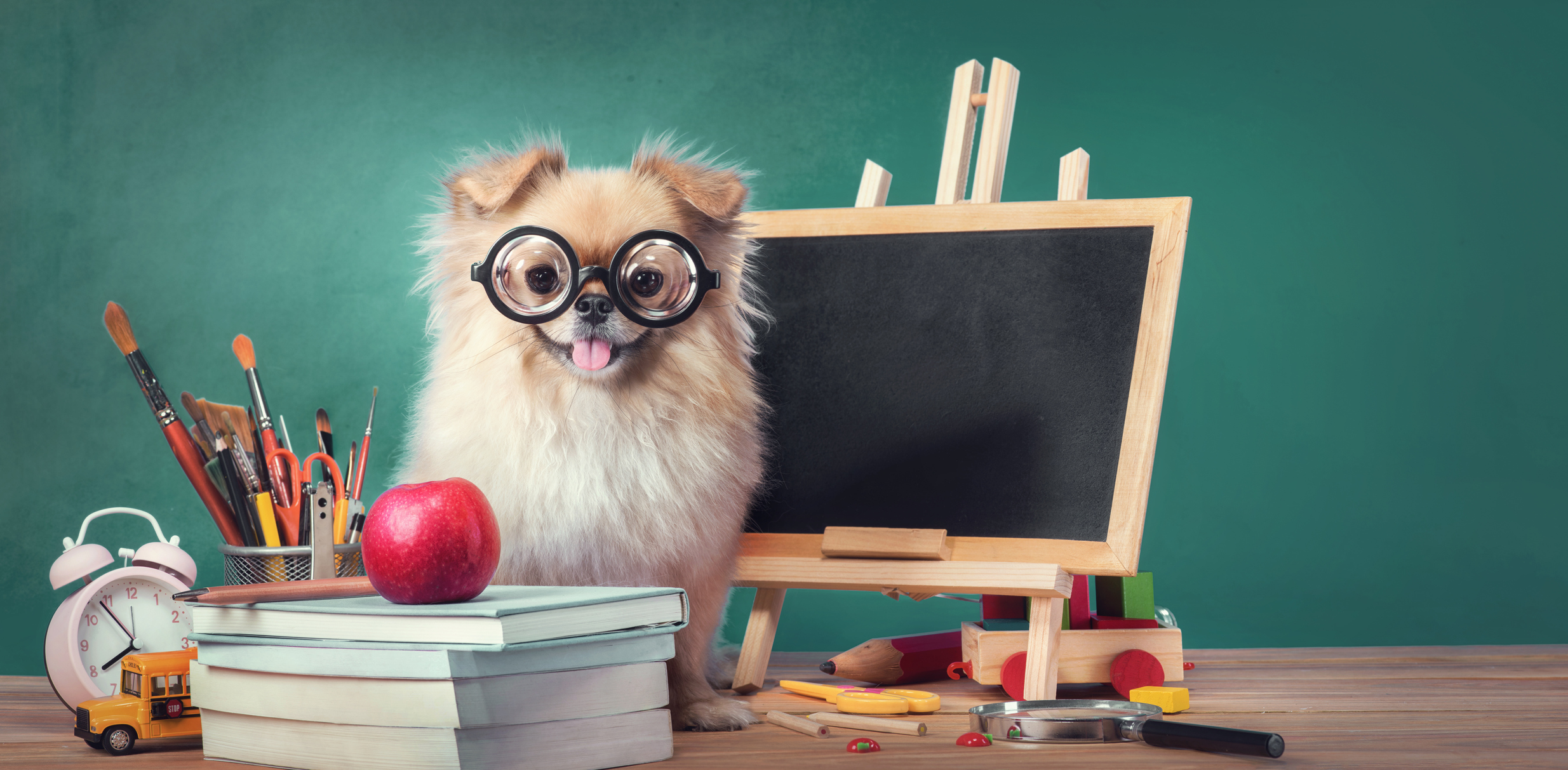
Alexandria, VA – As summer life starts to fade, families prepare to get their kids back to school. Schedules shift, school shopping begins, and logistics are finalized. High school graduates leave for college, resulting in a significant change in family dynamics. Although humans in the household adapt relatively quickly, our canine companions can find these changes somewhat stressful.
Dogs thrive on routines, stability, consistency, and structure. I’m not talking about the old-fashioned dominance theory structure, but rather knowing how to navigate successfully in our human-centric world. When things change in the home, some dogs can exhibit anxiety or concerns. Training is a great way to instill routines and consistency back into your dog’s life. Here are a few tips to help you and your pup get back on the training wagon!
Easier to Reinforce than to Correct Behavior
Children learn better through positive reinforcement. Similarly, rewarding and praising dogs for good behavior can have excellent results. Food is usually a dog’s biggest motivator and the most effective way to reinforce behaviors and teach new skills. Balls, toys, and even belly rubs work well too. Remember that the reinforcer must be reinforcing to your dog.
Repetition
Training your dog shouldn’t be arduous, but it is a lifelong journey. Behaviors such as jumping, digging, barking, and pulling on leash come naturally to dogs and are highly self-reinforcing. Teaching your dog to keep four feet on the floor, walk nicely on a leash, and stay calm in the presence of other dogs, people, and squirrels is a challenge – that behavior does not come naturally. Integrate training into your everyday life with short sessions lasting between a few minutes and 15 minutes, three to five times a day. Repetition helps our dogs learn and remember what we teach them. Make training fun for you and your dog!
Practice, Practice, Practice
Having a dog that chooses the right behavior involves consistent training and practice that you both enjoy. Remember, if you only practice in the living room, your dog may only be reliable in that space. Practice both inside and outside your home to increase reliability. The more distracting the environment, the more difficult it is to keep your dog’s attention and focus on you. Start with low distractions and work up to higher.
Training builds a positive relationship and bond with your dog. It gets their brain working and can help them be calmer. A tired dog is a good dog! Challenge your dog daily with a few training games, and you’ll see the good behaviors repeating, as well as a noticeable change in their energy level.
Recess
School children get recess to play or relax outside in the fresh air. Apply this concept to training with your dog. Let them release some energy, absorb what they have learned, and have some fun. Play builds your dog’s connection and focus on you, so why not incentivize it? Use their toys, balls, and tugs as training opportunities with rewards. By incorporating play in your training sessions, your dog associates having fun with you as part of their training. Win-win!
Time to Get Started!
Even if you’ve not begun training, you will see changes in your dog’s behavior quickly once you get started. It’s science! Reinforcement drives behavior.
At Wholistic Hound Academy, our professional, experienced, and certified trainers are ready to help you and your dog share a more joyous life. We look forward to seeing you and your canine scholars soon!
Sandy Modell, CPDT-KA, is the Founder, Owner, and Head of Training of Wholistic Hound Academy. Visit www.wholistichound.com to learn more. Follow on social media, @wholistichound.
Post Views: 40
link