


Pet owners often cherish their animal companion so much that they choose to snuggle up in bed with them at night. While medical professionals previously advised against co-sleeping with pets, emerging research suggests that the practice may have positive effects on physical and emotional health. We explore the benefits and drawbacks of sleeping with a pet, along with tips on how to get the best shut-eye alongside your furry friend.
Should I Let My Pet Sleep With Me?
With small animals like gerbils and chinchillas that like to nibble on things, might run away, and are not easily potty trained, sleeping together may not be a good idea. With larger, housebroken animals, the question of whether to share a bed or not typically comes down to personal preference. Pets offer comfort and affection, but sharing a bed may trigger allergies or make it harder to get a decent night’s sleep. Whether the benefits outweigh the risks depends on you, your pet, and your unique lifestyle preferences.
Research shows
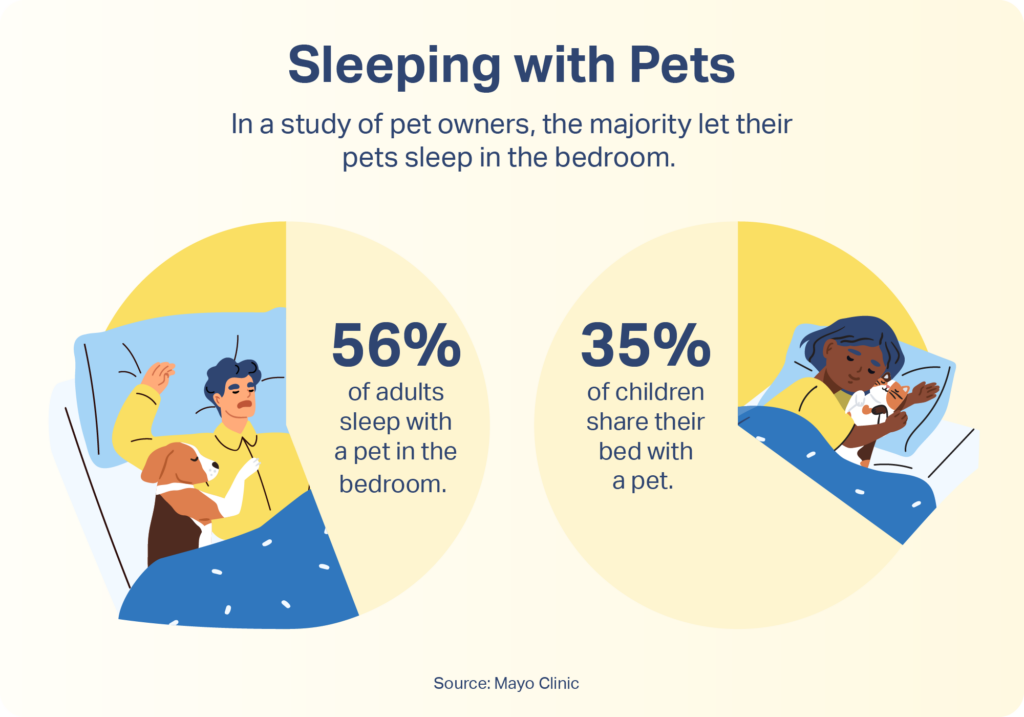
56% of people
Trusted Source
National Library of Medicine, Biotech Information
The National Center for Biotechnology Information advances science and health by providing access to biomedical and genomic information.
View Source
report sleeping with a pet in their bedroom, and nearly
35% of children
Trusted Source
National Library of Medicine, Biotech Information
The National Center for Biotechnology Information advances science and health by providing access to biomedical and genomic information.
View Source
share their bed with a pet at night. Co-sleeping may even be preferred by your pet, with over
86% of puppies
Trusted Source
National Library of Medicine, Biotech Information
The National Center for Biotechnology Information advances science and health by providing access to biomedical and genomic information.
View Source
choosing to sleep near a human when they have the opportunity.

Benefits of Sleeping With Pets
Research and subjective human experience suggest sleeping with a pet can provide a variety of benefits.
Comfort and Security
Some people choose a pet, particularly a dog, for safety and protection. Service dogs can provide emotional support to people with post-traumatic stress disorder (PTSD) when they experience a nightmare. PTSD service dogs are trained to identify physical signs that indicate a person is having a nightmare, so they can disrupt the nightmare by waking them up. In a study of veterans with PTSD service dogs, 57% stated that their dog helped ease their nightmare problems.
Better Emotional Health
Having a pet can reduce anxiety and loneliness, ease symptoms of mental health conditions, help regulate emotions, and add to a sense of purpose and meaning in life. A pet’s unconditional love can
increase oxytocin levels in adults
Trusted Source
National Library of Medicine, Biotech Information
The National Center for Biotechnology Information advances science and health by providing access to biomedical and genomic information.
View Source
and
reduce cortisol levels in children
Trusted Source
National Library of Medicine, Biotech Information
The National Center for Biotechnology Information advances science and health by providing access to biomedical and genomic information.
View Source
, which are associated with relaxation and stress reduction.
The relaxing effect of interacting with a pet appears to be at least partially due to physical touch, so snuggling with your dog can ease the mind and promote tranquility. Many people claim that sleeping with their pet benefits their sleep, and an older study found that people with pets were
less likely to take sleep medication
Trusted Source
SpringerLink
SpringerLink provides researchers with access to millions of scientific documents from journals, books, series, protocols, reference works, and proceedings.
View Source
than people who do not have pets.
Potentially Heightened Immunity
The presence of dogs or cats significantly influences the makeup of bacteria found in a home, which in turn can impact the immunity of humans living there. Researchers hypothesize that exposure to a diversity of microorganisms benefits human health and strengthens immunity.
The presence of a pet may be even more beneficial to the developing immune systems of children and infants. Being exposed to two or more dogs or cats in the first year of life may reduce a person’s likelihood of developing allergies to dogs and cats, as well as dust mites, blue grass, and ragweed.
Full-Body Wellness
Pets are demonstrated to improve human physical health in many ways, including lowering blood pressure. Owning a dog is correlated to a reduced risk of death, likely because of these positive effects on the cardiovascular system. Early research on this topic found that petting dogs reduces blood pressure and heart rate. If touching your pet is a direct way to gain these health benefits, cuddling up together at night might help.
“It may be tempting to snuggle up with your dog at night, but sleeping in bed can definitely disturb one’s sleep. They might move around during the night, disturb your body’s ability to regulate its temperature or exacerbate allergies.”


Dustin Cotliar, MD, MPH
Physician


Risks of Sleeping With Pets
Although sleeping with pets brings many people joy, sleeping with an animal may come with some drawbacks.
Allergies
In the United States,
millions of people
Trusted Source
National Institute of Environmental Health Sciences (NIEHS) Environmental Factor
The mission of the NIEHS is to discover how the environment affects people, in order to promote healthier lives.
View Source
who have pet allergies live with a pet regardless. However, people with pet allergies may want to consider keeping pets out of the bedroom, even during the day, to avoid exposure to pet hair and dander during sleep.
If you believe your pet might be triggering allergy symptoms, you may want to visit your doctor to request an allergy test and to discuss treatment options.
Germ Exposure
The germs brought into your home by a pet can have both positive and negative effects. On one hand, exposure to a greater variety of bacteria and other microbes may help strengthen the human immune system. On the other hand, pets can carry in harmful bacteria, viruses, and parasites as well, putting the families they live with at risk.
For these reasons, people who are more prone to infection, those who are immunocompromised, and those who have an open wound might want to avoid sleeping with pets.
Nighttime Disruptions
Some pets, especially larger ones, are prone to sprawling out and taking up more than their fair share of bed space. Sleep disturbances when sharing a bed may vary depending on the type of pet. In one study, women who shared a bed with a dog reported less disturbed sleep than those who shared a bed with a cat.
The sleep quality ramifications of sharing a bed with your dog or cat are likely relatively mild. If you would like to minimize sleep disturbances, researchers have found that having the dog
sleep elsewhere in the bedroom
Trusted Source
National Library of Medicine, Biotech Information
The National Center for Biotechnology Information advances science and health by providing access to biomedical and genomic information.
View Source
, such as a cozy bed of their own, can make your slumber a bit more peaceful.
Territorial Behavior
Bites from your pet can spread infection and cause injury, and dogs may be more likely to bite when abruptly awoken from sleep.
Children are more likely than adults to sustain a dog bite requiring medical attention. This may be caused by a child’s inability to read signs of fear or aggression, or because they are more likely to get very close to a dog’s face. This is not to say that children can never sleep with a dog, but parents might not want to allow children to sleep with large dogs or dogs that have shown aggression before.
“It’s often best to get your dog used to sleeping in a bed next to you in your bedroom.”
Dustin Cotliar, MD, MPH
Physician
Tips for Sleeping With Your Pet
If you do decide to sleep with your pet, these tips can boost sleep quality for both you and your animal friend.
- Use a properly sized mattress: To reduce disturbances when switching sleeping positions, make sure your mattress is large enough to adequately accommodate you, your pet, and anyone else who shares your bed.
- Wash sheets and bedding regularly: Good hygiene is key to preventing the spread of unwanted germs. Routinely wash your bedding, as well as any pet beds or blankets you bring into your bedroom. If your pet spends time outside, you might also consider wiping down their paws and coat to keep dirt, pesticides, and outdoor allergens out of the bedroom.
- Stay up to date on vet visits: Keeping your pet free of disease protects you, as well. Make sure your pet is current on the recommended vaccinations for their species, and maintain the flea and tick treatments and deworming schedule outlined by your vet.
- Walk your pet before bed: Taking your pet for a walk before bedtime allows them one last chance to go to the bathroom and might help burn off excess energy, so they move less and cause fewer sleep disruptions.
- Keep a consistent bedtime routine: Like humans, animals have a circadian rhythm that governs when they feel tired and when they feel awake. Going to sleep and waking up around the same time each day may help you and your pet stay on a relatively similar sleep-wake cycle and protect against restless nights.
Even though companion animal sleep patterns differ from our own, many people are able to successfully share a bed with their pet by making some adjustments. To ensure a positive sleeping experience, be aware of overheating or any other signs that your pet might not be sleeping well. Small children and small pets should not share the bed with others, due to the risk of injury.


Still have questions? Ask our community!
Join our Sleep Care Community — a trusted hub of sleep health professionals, product specialists, and people just like you. Whether you need expert sleep advice for your insomnia or you’re searching for the perfect mattress, we’ve got you covered. Get personalized guidance from the experts who know sleep best.
link